Fibre artist Kasia Dudkiewicz writes for Interiors Addict about her very personal journey from mat leave to full-time artist.
Fibre art didn’t arrive in my life with grand ambition. It came quietly—almost without notice—during the early, suspended days of motherhood. That in-between space where time stretches and identity softens. I didn’t set out to make art. I simply picked up rope.
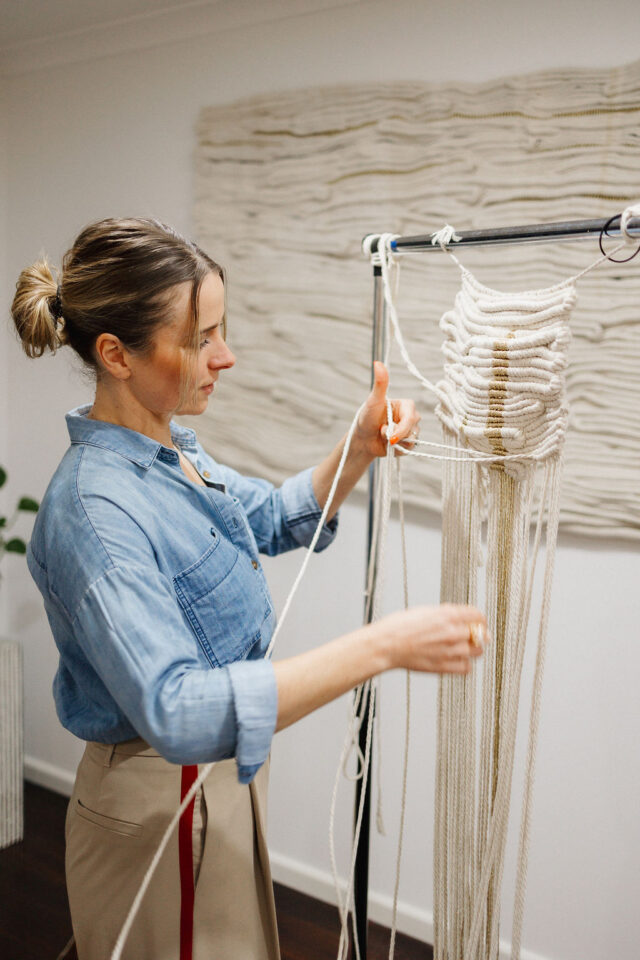
My hands moved before I understood why. I began knotting—looping, twisting, pulling—driven by an impulse I couldn’t yet name. There was no plan. No outcome. Just the repetition, the resistance, the rhythm. I wasn’t creating something to hang. I was making a way back to myself.
Looking back now, I can see how much of my earlier life was shaped by drift. I let things happen. I followed the current. I said yes too often. I confused passivity with peace. Somewhere along the way, I stopped listening inward. And it was through the tension of fibre—its resistance and surrender—that I learned how to come back into myself with intention.
What began as a personal reckoning slowly became a practice. In knotting, I found not just calm, but clarity. Each twist of rope mirrored something internal: a thought unspooling, a memory surfacing, a belief loosening its grip. I discovered that the physical act of tying and untangling was not unlike navigating emotion. You can’t rush it. You sit with it. You soften into it.
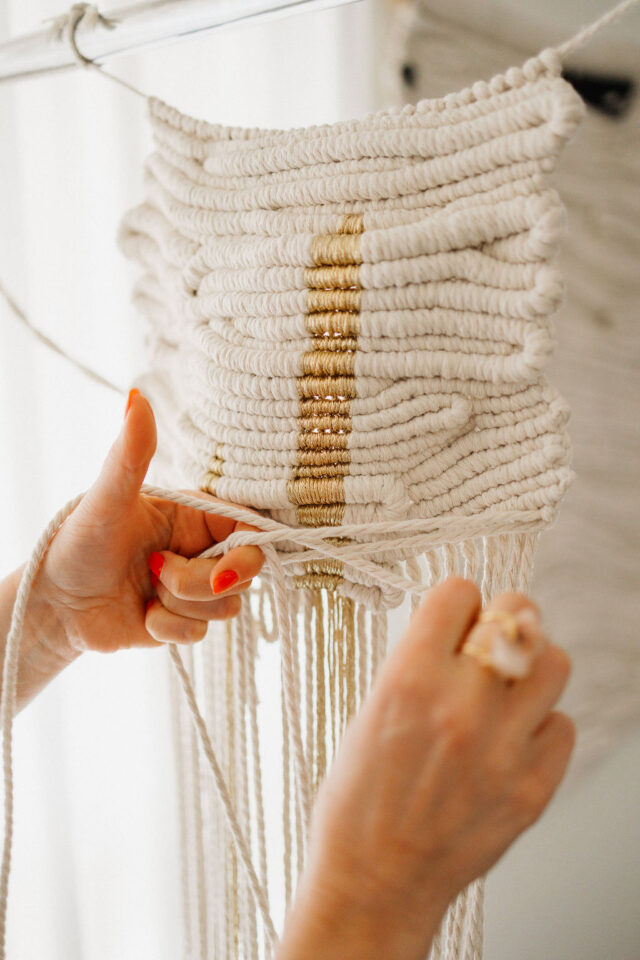
Earlier this year, I presented my first solo exhibition—Threads of Connection… to Self—at Melbourne Design Week. The work was intuitive, textural, and expansive. Each piece mapped emotional landscapes I had walked through slowly and sometimes reluctantly. But what moved me most was the way others responded.
People lingered. They shared. They connected. I listened as visitors told me how fibre had found them too—during lockdown, in recovery, through burnout or heartbreak. For many, it had been a lifeline. Something quiet and tactile to hold when words weren’t enough.
There’s a kind of soft power in fibre that invites presence. It’s not flashy. It doesn’t demand attention. It offers a place to rest your eyes—and sometimes your heart. I think that’s what people are craving in both art and space right now: a sense of grounding. A kind of emotional architecture.
And that’s where my practice bridges into design. While my work is rooted in feeling, its form is built for space. Fibre art lives beautifully in homes, yes—but also in lobbies, foyers, waiting rooms, wellness studios, boutique hotels, restaurants. Anywhere people gather, pause, or pass through.
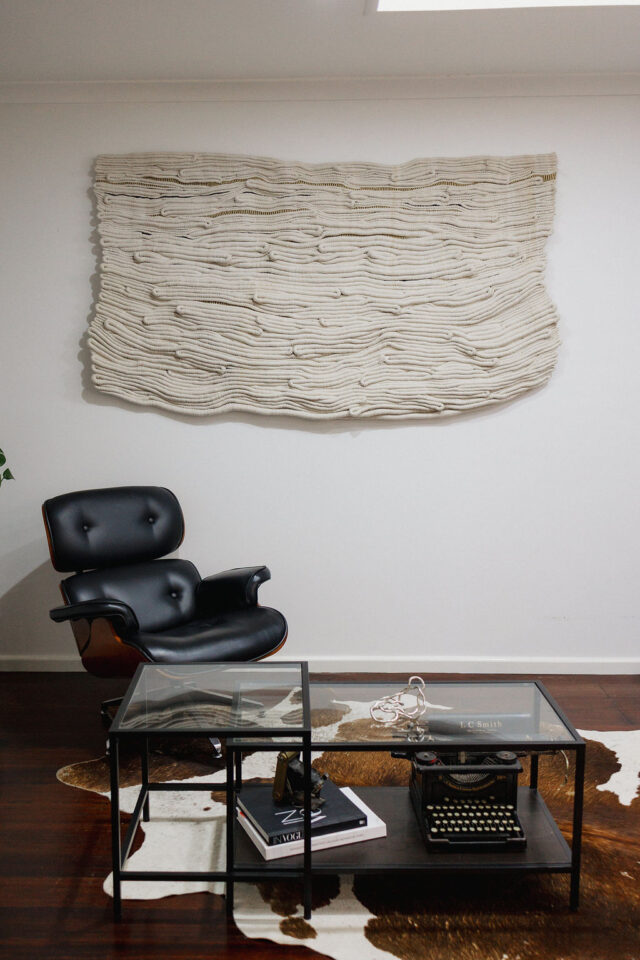
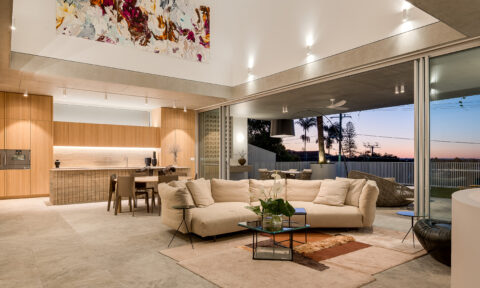
In residential interiors, my pieces often become soft focal points—adding warmth, depth, and cohesion to minimalist or open-plan layouts. They bring balance to negative space, help unify high ceilings, and soften hard lines. One recent commission filled a double-height void in a contemporary home—instantly grounding the space and quieting the echo that had been bothering the homeowners for months.
In hospitality settings, fibre installations shift the tone completely. In hotel lobbies and boutique accommodation, they offer a tactile moment of pause—something unexpected that invites guests to stop and feel a space rather than just pass through it. In wellness environments, fibre calms. It absorbs sound. It slows energy. I’ve seen it completely transform reception areas in spas and studios—shifting them from transactional zones into places where people begin to unwind the moment they arrive.
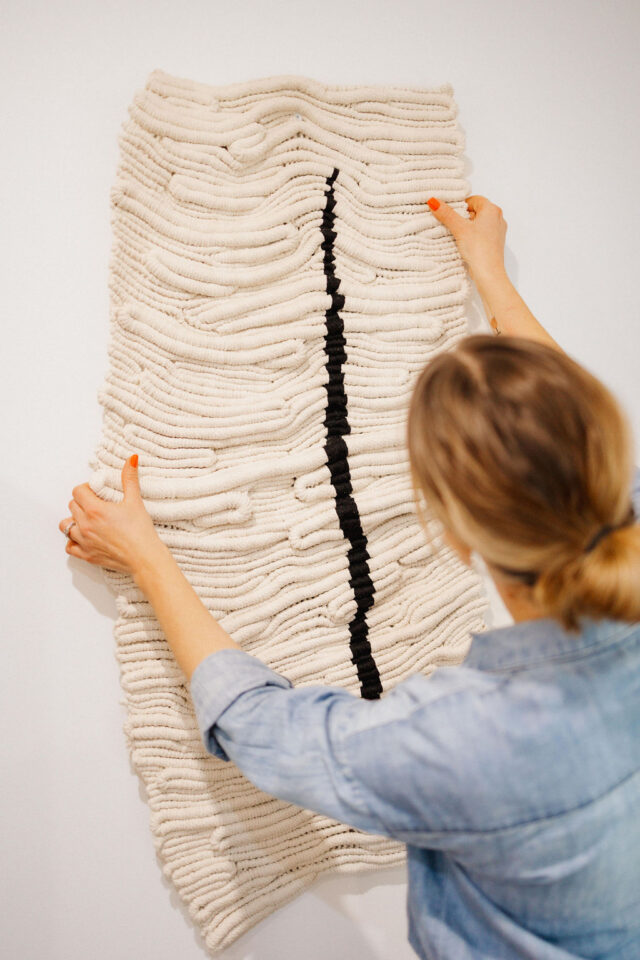
In commercial and office settings, where clean lines and acoustics often dominate, fibre adds a human layer. A large-scale, wall-mounted installation can create visual softness, improve sound quality, and reflect brand values—especially for businesses centred on care, creativity, or sustainability.
What makes fibre so adaptable is its versatility. The medium can be scaled, shaped, dyed, or suspended to suit its environment. It can wrap a column, fill a corner, cascade down stair voids, or sprawl across a wall with deliberate movement. And always, it holds its grounding presence—soft, architectural, quietly commanding.
Interior designers often tell me that my work becomes the piece people ask about. Not because it shouts—but because it feels. It gives a space soul. And function. It’s artwork with atmosphere.
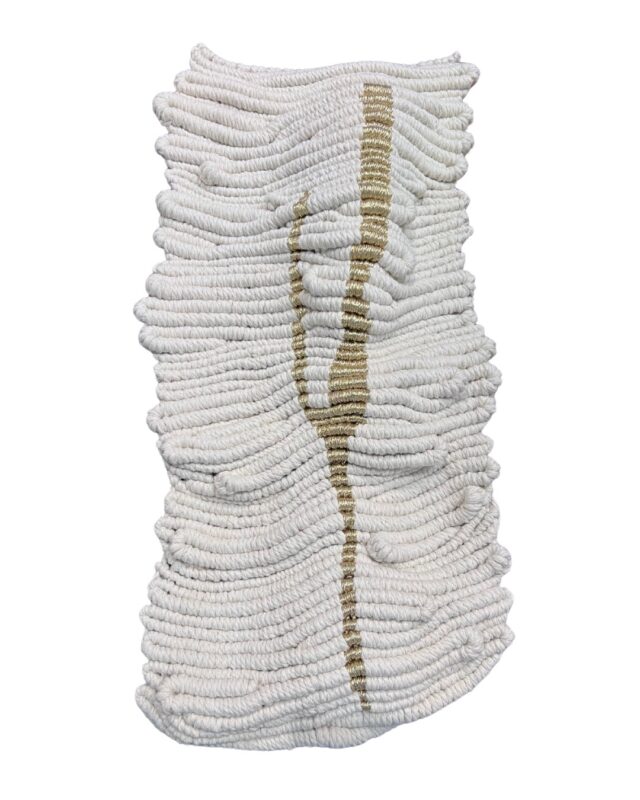
I choose natural fibres because they breathe. They shift. They carry memory. Their imperfections become their beauty. I don’t seek polish. I seek presence. The fray, the sag, the evidence of process—these are the qualities that make a piece alive.
And that’s what fibre art offers—not just for the wall, but for the people who live alongside it. A way to slow down. A way to connect. A way to feel the texture of your own experience reflected back at you, softly.
Knotted by Hand began as a quiet act of self-repair. Today, it’s a conversation—between material and maker, space and soul, tension and release. And that conversation is ongoing. With every new piece, I return to that same instinct: to hold space. To offer something calm. To create work that doesn’t just decorate—but resonates.
Kasia Dudkiewicz is a fibre artist based in the Macedon Ranges, Victoria. Through her studio Knotted by Hand, she creates sculptural textile installations that explore presence, emotion, and the architecture of feeling. Her work—crafted with sustainable, natural fibres—has been exhibited at Melbourne Design Week and is held in private collections across Australia and internationally. Her large-scale pieces are sought after by interior designers, architects, and curators for residential, commercial, and hospitality spaces.
Images: Angelica James Photography



Comments
What a beautifully written piece. Kasia’s journey is so moving, and the way she speaks about fiber art as both healing and grounding really resonated. So inspiring and heartfelt.
There’s something so grounding about hand‑knotted fibre art—the sculptural forms, subtle shadows, and quiet movement you only get from natural fibres. It’s the kind of texture that makes a room exhale.