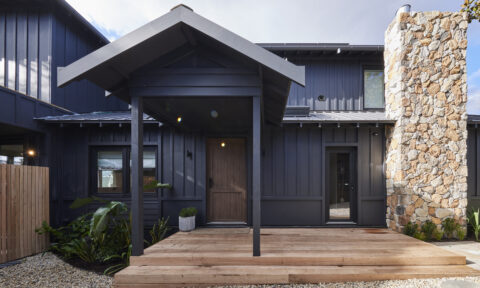
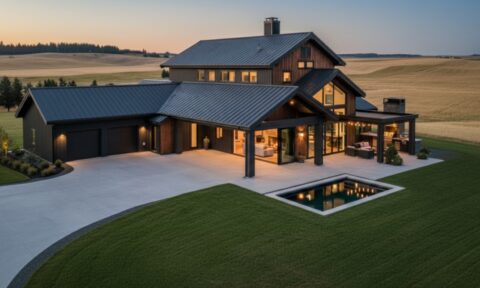
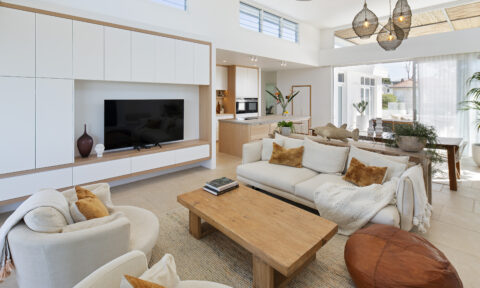
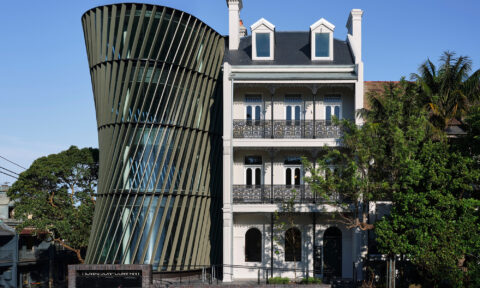
The newest addition to Australia’s most sustainable housing community, The Cape in Cape Paterson, is making a bold statement in sustainable coastal design. Cooinda, an Australian first nations word meaning “happy place,” is a visually striking, 8.2-star home designed and built for high performance, liveability and beauty.
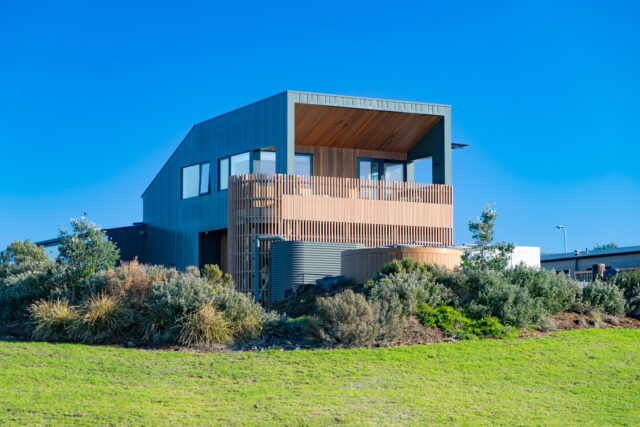
Recently completed, the carbon-neutral home has recently been recognised with the Best Sustainable Home award at the 2025 HIA Regional Building Awards (Eastern).
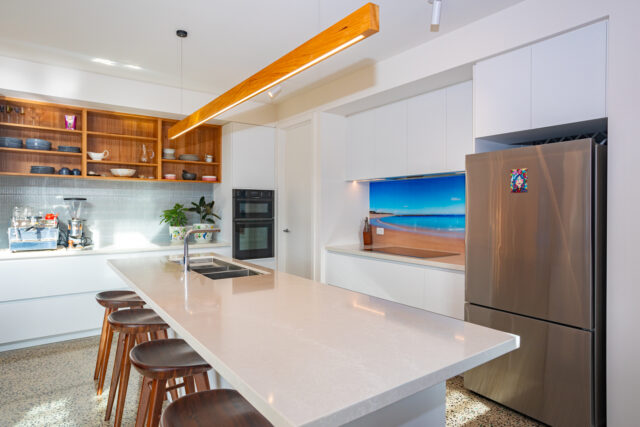
Designed by leading sustainable housing architects, Adam Dettrick Architects and built by multi-award-winning local builder, TS Constructions, Cooinda quietly redefines what coastal living can be -comfortable, low-impact and architecturally inspiring.
Brendan Condon, the homeowner and director of The Cape, said the home reflects the next evolution of sustainable design. “Every square centimetre has been carefully considered to reduce its environmental impact while maximising comfort, performance and beauty,” said Brendan. “Cooinda sits beautifully within the spirit and design philosophy of The Cape. It embodies everything we stand for – low-impact design, year-round comfort, smart technology and above all, a strong connection to community and landscape.”
He added: “My partner, Marie and I wanted a home that would support healthy living, withstand coastal conditions and contribute positively to our local environment and that’s exactly what Cooinda delivers.”
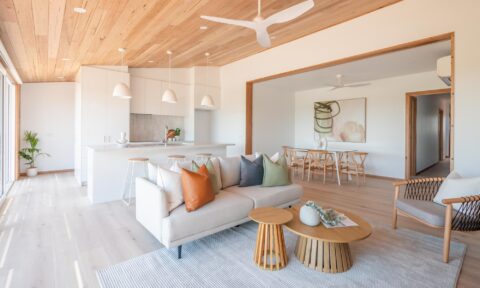
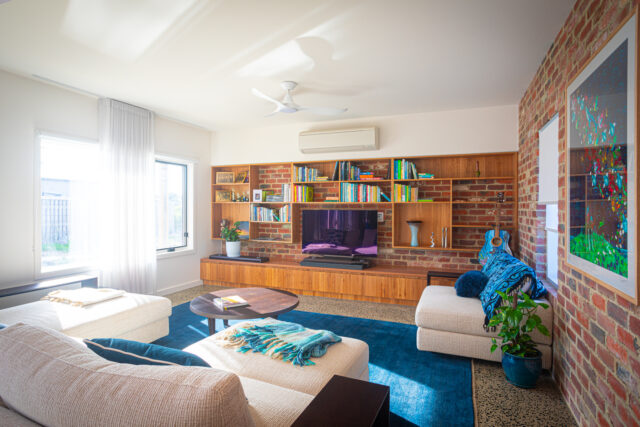
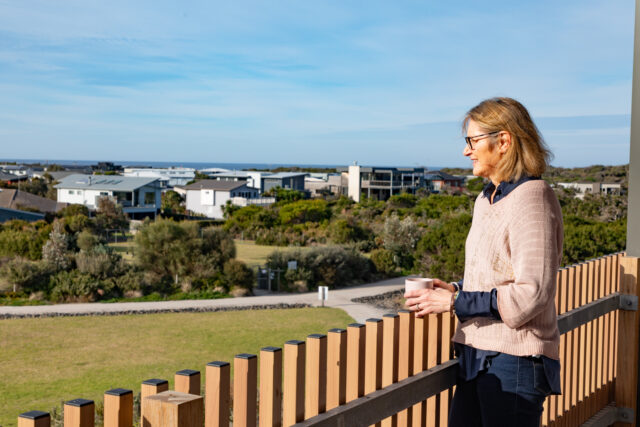
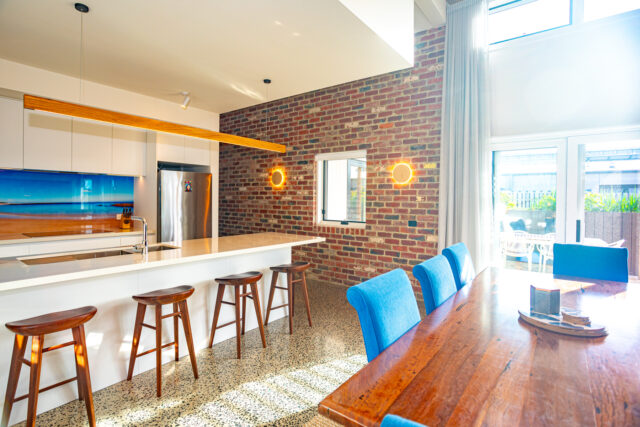
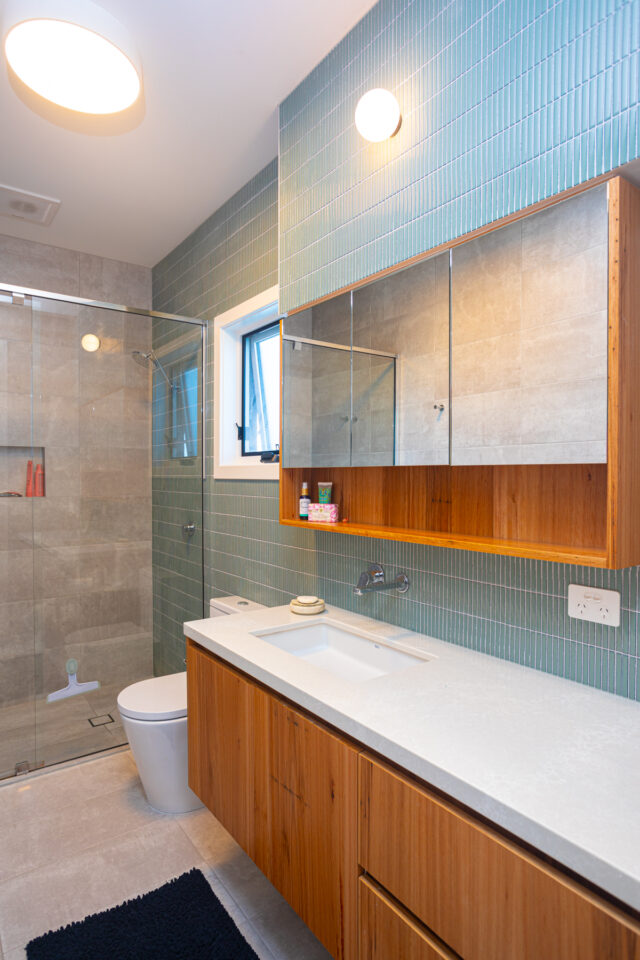
The double-storey home features 200m² of light-filled living space, two downstairs bedrooms, a dedicated study and a generous mezzanine with sweeping views of Bass Strait. Timber finishes, polished concrete floors, ply ceilings and recycled red bricks bring warmth and texture to the interiors, with carefully selected joinery and finishes that minimise VOCs and off-gassing.
The kitchen splashback features photographic glass panels of the local beach, while the façade combines durable, low-maintenance materials such as recycled timber-infused blockwork, Weathertex cladding and bushfire-resistant timber, achieving BAL-29 compliance.
Builder Tony O’Connell, director of TS Constructions, said the home sets a new standard in sustainable craftsmanship. “From every angle, Cooinda makes a head-turning statement. We are proud to bring the vision of Cooinda to life. It’s a home where the materiality, energy system and thermal performance all work in harmony. It is airtight and robust, yet incredibly inviting – built for this generation and the next.
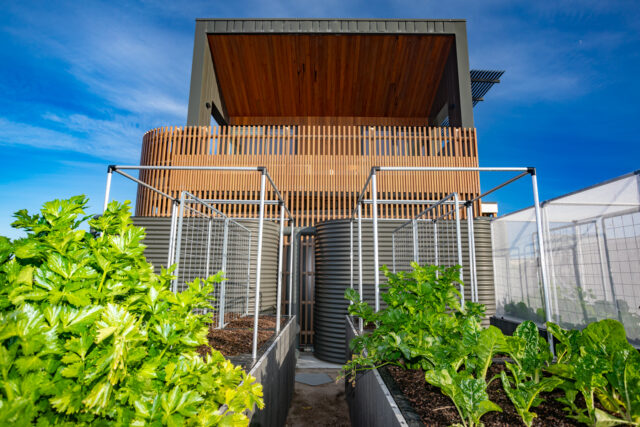
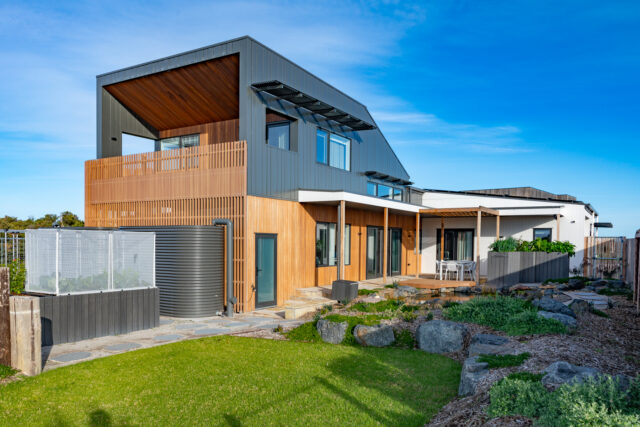
“The front of the home combines strong geometric forms with a palette of natural textures, including timber batten screens, warm recycled brick, bushfire-resistant cladding and integrated water tanks. It balances visual boldness with environmental restraint.”
He said they deliberately kept the entry clean and refined, letting the form and the materials speak for themselves. The batten screen provides shading and privacy without closing the home off from the street. “It’s a true example of considered and passive design,” Tony added.
Cooinda exceeds all of The Cape’s high minimum standards, which already require at least a 7.5-star energy rating, 10,000 litres of water storage and solar PV.
Cooinda features:
- An 8.8kW solar PV system with a 12kWh Redback battery and hybrid inverter including blackout protection
- 46,000 litres of rainwater storage for potable and garden use and external fire protection
- A Sanden heat pump hot water system with a coefficient of performance of 6
- 8.0 NatHERS star rating with a blower door test result of 4.02 ACH@50Pa – demonstrating a high level of airtightness that significantly reduces heat loss and enhances thermal comfort year-round
- Miglas Aluclad double-glazed windows to maximise insulation and minimise maintenance
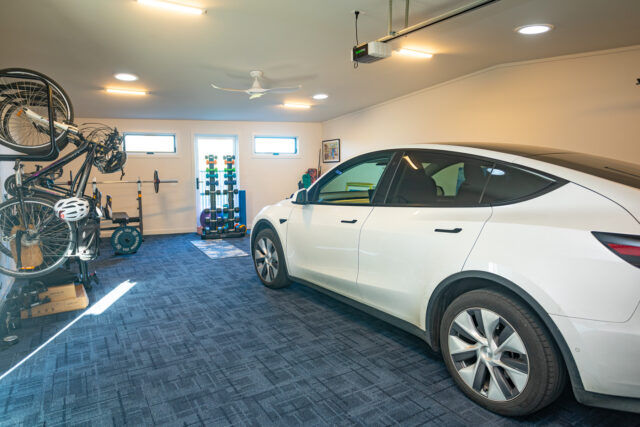
- Electric vehicle charging via Zappi in the garage
- A fully insulated, carpeted garage designed for electric vehicle housing. This high quality space highlights yet another co-benefit of owning electric vehicles – they don’t leak oil – which allows a homeowner to carpet the garage and turn garages into both EV car storage and other higher order uses such as a home gym or games space
- A self-watering Foodcube wicking bed vegetable farm that produces over 350 kilograms of fresh produce per annum.
- A natural habitat pool and biodiverse landscape to support local wildlife.
Its airtight construction and passive solar design mean year-round comfort with minimal reliance on mechanical heating or cooling. Modelling indicates annual power bills around $1,000 while powering two electric vehicles – a fraction of a typical Victorian household’s energy use and saving over $6,000 per year in avoided gas and petrol bills and reduced electricity bills.
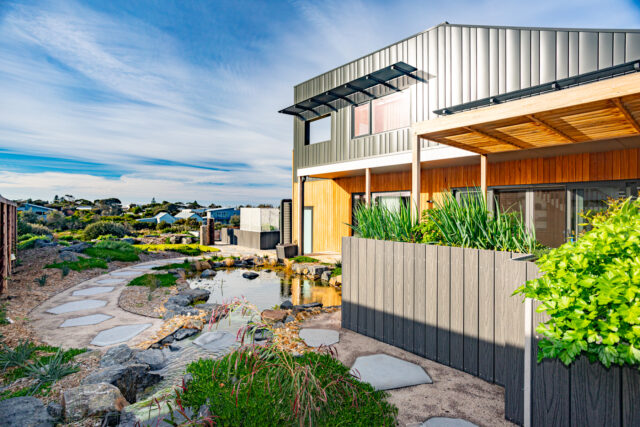
The landscape design features native species and a pond to encourage biodiversity, while clever orientation and room placement invite cross ventilation and natural light. Low-toxicity materials, water-wise plantings and smart energy features combine to create a home that is not only efficient to run, but healthier to live in.
“Living in a home like this gives you a sense of peace, not only from the magnificent view or the comfort, but knowing that you are reducing your footprint and future-proofing your lifestyle,” said Brendan.
Cooinda is the latest in a growing collection of climate-resilient, future-ready homes at The Cape and an inspiring blueprint for what tomorrow’s homes can and should be.
Homes at The Cape are all-electric, average an 8-star NatHERS rating, and come equipped with rooftop solar and rainwater harvesting systems. More than 50 percent of the 40-hectare site is preserved as open space, including wetlands and wildlife habitat, creating a peaceful, regenerative lifestyle, only 1.5 hours from Melbourne.
Residents also enjoy access to fast fibre internet, edible streetscapes, an award-winning community farm, as well as kilometres of shared walking and cycling trails. With no front fences, generous block sizes, and natural gathering spaces, The Cape fosters a close-knit, connected lifestyle – one that is both environmentally sound and emotionally satisfying.