By Kane Tyler Smith
If you’ve ever moved into a “finished” renovation and immediately wished you had one more powerpoint in the kitchen, or a light switch on the other side of the doorway, chances are the rough-in stage is to blame.
The electrical rough-in happens early; well before paint colours and tapware are even on your radar, which is exactly why it’s so easy to overlook. But it’s also one of the last points in your renovation where changes are simple and affordable. Once the walls are closed up, anything you forgot becomes a much bigger (and pricier) job.
Here’s what’s actually involved, what to ask your electrician, and the mistakes worth avoiding.

What happens during the rough-in
The rough-in is the stage where your electrician runs all the wiring through the frame of your home, before insulation, plasterboard or any wall linings go up. It typically happens straight after framing is complete and any plumbing rough-in is done, and before the walls are closed.
During this stage, your sparky will:
- Run cabling to every point where you’ll need power, lighting or data
- Install the boxes and brackets that switches, powerpoints and light fittings will eventually sit in
- Position wiring for any built-in appliances, ducted air conditioning, ceiling fans or smart home features
- Coordinate with your builder so cabling doesn’t clash with insulation, ducting or structural elements.

It’s a behind-the-scenes job, but it sets the foundation (quite literally) for how your home functions for years to come. Because everything is hidden inside the walls once they’re closed, this is the point where “we’ll just add one later” stops being a simple fix.
Questions to ask your electrician before work starts
A good electrician will walk you through this, but it helps to come prepared. Before the rough-in begins, it’s worth asking:
- Have we planned for how we’ll actually live in this space? Walk through your daily routine room by room, not just where furniture will go.
- Do any appliances need a dedicated circuit? Ovens, induction cooktops, air conditioning and EV chargers often need their own circuit, and retrofitting one later means opening up walls again.
- Where will furniture sit, long-term? Power points behind a bedhead or sofa aren’t much use to anyone.
- What’s our lighting plan, room by room? Pendant lights, downlights, under-cabinet strips and outdoor lighting all need to be planned before walls close, even if you haven’t chosen fittings yet.
- Are we futureproofing for anything? Solar, a home battery, an EV charger, extra data points for a home office. Adding conduit now is far cheaper than cutting into a finished wall later.
We see the same handful of issues come up again and again on renovation sites, and they’re almost always avoidable with a bit of upfront planning.
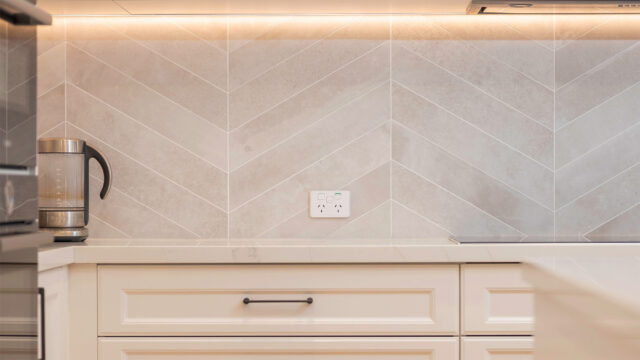
Not enough power points. It’s the single biggest regret we hear from homeowners. The general rule of thumb is to plan for more than you think you’ll need, particularly in kitchens, home offices and living areas.
No dedicated circuits for big appliances. Forgetting a dedicated circuit for the cooktop, oven or air conditioning unit is a common one, and it usually means more invasive (and expensive) electrical work down the track to correct.
Lighting placement that doesn’t match how the room is used. It’s easy to default to a single centre light per room. But without considering task lighting, feature lighting or where furniture will actually sit, you can end up with shadows in all the wrong places.
Switches and points in awkward spots. A light switch on the wrong side of a doorway, or a power point hidden behind where the fridge ends up, are small details that are easy to fix on paper and frustrating to live with forever.
Leaving data and smart home wiring as an afterthought. Even if you’re not ready to commit to a full smart home setup, running extra conduit or cabling during the rough-in is far simpler than retrofitting later.

Before your electrician starts, sit down with your renovation plans and tick off:
- Power point locations in every room, including behind likely furniture placement
- Dedicated circuits identified for major appliances and air conditioning
- Lighting plan for each room, including task and feature lighting
- Switch placement checked against door swings and furniture layout
- Outdoor power and lighting needs accounted for
- Data, NBN and smart home cabling considered, even if not installed yet
- Any future additions flagged now (solar, EV charger, home battery).
It doesn’t need to be perfect on the first pass, but working through it properly with your builder and electrician before the walls close is one of the simplest ways to avoid expensive surprises later in your renovation.
Kane Tyler Smith is founder & CEO of Smartfix Electrical & Air Conditioning, a licensed Perth-based trades business.