Online 3D chair designer launches today

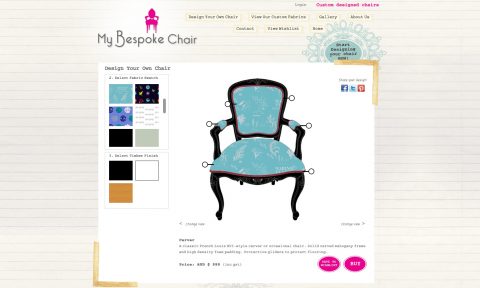
My Bespoke Chair claims to be the world’s first 3D online chair design studio.

British/Dutch artist Emma Veiga‐Malta, who has a studio in Sydney’s Mosman, founded My Bespoke Chair as a natural progression from the parent company Bespoke Art. While creating tailor‐made art and fabrics, she had many clients request specific and unusual fabric combinations for their upholstery. With the internet streamlining business, and the increasing upholstery work at Bespoke Art, Emma put two and two together and created My Bespoke Chair.

“It captures the zeitgeist of social, online shopping and mobile, smart technologies. We have developed an online “point and click” tool which gives the customer total design freedom,” says Emma. “All our fabric designs start life as hand painted art, designed in‐house. The fabrics are exclusively ours, printed in limited runs, ensuring that every chair is a work of art.”

The customer chooses a chair style, then scrolls through the collection of fabrics and selects all the chair’s upholstered elements in any combination. They can spin the chair 360 degrees to view their design from every angle. [Read more...]

WIN two industrial bedside tables!

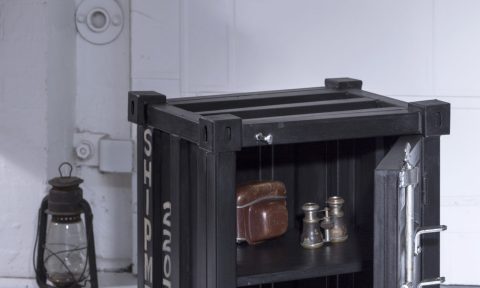
Love the industrial look? Then two of these bedsides could be the perfect thing to add the finishing touches to your bedroom!

Thanks to Milan Direct, I have two to give away to celebrate the launch of its brand new industrial inspired range of furniture and homewares. [Read more...]

6 for the price of 5 Wishbone chairs at Cult

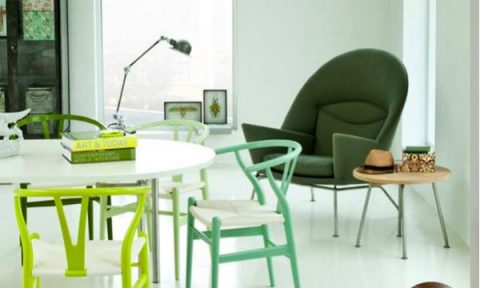
Ah, the Wishbone by Hans Wegner! My favourite chair of all time! They come in so many fabulous colours these days. If you’ve been thinking of investing in the real deal (NOT replicas) then Cult have just the deal for you with 6 for the price of 5.

[Read more...]

Milan Direct expanding beyond just replicas

Some of Interiors Addict’s most commented posts last year were around the replica furniture debate. While some people in the industry have a very anti-replica stance, there is clearly a huge market out there for replica furniture. Milan Direct however, is trying to expand beyond replicas. Boss Dean Ramler spoke to Interiors Addict as the company launches a new Facebook page and blog.


This Christmas, Milan Direct’s sales were up 70 percent in Australia. “Milan Direct has always been known for its high quality replica designer furniture, and it still remains an important part of our business with new and improved models of many of our classic replica pieces continuing to be introduced,” says Dean. “However, as a business we want to be recognised for a lot more than that. Our goal is to meet all the designer furniture needs of our customers and offer them the best value in home, office and outdoor furniture and homewares. As such we are broadening our range of products with a shift away from purely classical or famous design reproductions to newer designs and product lines which can offer better value.”

And while the industry replica backlash can’t be ignored, Dean says some of their biggest customers are interior designers and architects. “They appreciate that enjoyment of quality design shouldn’t just be reserved to those with the budgets to afford it. In saying that though, I can certainly understand why some are against replicas and we respect a customer’s right to only buy originals. However, we believe it is mainly just a misunderstanding in the design community that replicas are in some way bad for furniture designers.  

“In our view, replicas are celebrating the designers, and perpetuating and expanding their contribution to design history. Plus, in Australia, a designer of any new functional furniture piece is entitled to a complete monopoly over those designs for a set period of time (design patents). During that time, they can charge whatever they want for the new designs (and it can be very high) and enjoy the rewards without competition.”

After that time though, he says it is only fair that the wider public can make, buy, improve or alter the designs. “Most importantly, after the monopoly period ends, the nature of competition should be able to bring the price down, for the consumer’s benefit,” says Dean.

“We consider that those in interior design circles should respect replica products, and should also strive to achieve designs that pass the test of time and may therefore become replicas themselves one day. Without getting too technical, intellectual property law seeks to strike a balance between rewarding designers for their effort and the public benefit obtained though competition. As the great Charles Eames aspired to “create the best for the most for the least” – this is precisely what replicas do. They bring competition so that the most can enjoy for the least!”

Milan Direct is offering 15% off all non-sale items to celebrate the launch of its new Facebook page today. Enter the discount code: MDFACEBOOKPROMO (expires 9 March 2012).

What do YOU think about replicas?

Don’t buy disposable fakes, save up for a piece of furniture you’ll treasure

David Harrison is a respected interiors writer and stylist who regularly reports on the Milan Furniture Fair for Inside Out. He was once the Australian importer of Isamu Noguchi lights from Ozeki & Co Japan and Tendo Mokko Japan. He also distributed Carl Hansen in NSW for several years and imported vintage American pieces. In this guest post, he shares why he doesn’t think you should buy replicas.

“As an avid collector of vintage 20th Century furniture for the last 15 or more years, I have seen the rise of replica furniture from an occasional offensive dot on the design landscape to becoming an epidemic. While Anne-Maree Sargeant has spoken about most of the issues that make copying of a designer’s IP ethically and morally wrong, I would also like to point out how it also effects the manufacturer and the retailer of originals.

When a designer comes up with a concept for a new furniture or lighting piece they need to spend months, sometimes years of their life getting it to a stage where a manufacturer will take on the design for mass production. The designer is generally not paid for this development time unless they are commissioned by the manufacturer to design a specific object.

Most designers will present their design to several manufacturers, going from meeting to meeting and making new prototypes and will continually refine the design as a result of feedback from potential manufacturers and to streamline the manufacturing process. As I said, this can take years. If eventually a company decides to proceed and manufacture the design then the designer will be paid a royalty fee of a percentage of profit of every unit sold. As for musicians and writers, the fee per unit sold is minimal and the only way to make money is to achieve large volume sales.

A large percentage of Australian designers will struggle to get more than one item into production every couple of years. Not a large money earner as you can imagine. Very successful international stars may have 10-to-50 items in production at any one time but they also have to run a studio with assistant designers and office staff to facilitate the amount of design work. It’s by no means a cash cow.

The manufacturer has to tool up for production and depending on what the design is, this could cost anything from $50,000 to several million dollars. Often the manufacturer then takes the design to trade fairs around the globe along with their other new designs to the trade and general public, at great expense the company.

This is where the replica guy comes in. Secretly taking photographs at this point enables a replica manufacturer to avoid all the time-consuming and expensive development phases. All the manufacturing and material bugs have been resolved by the original designer and manufacturer – all the replica guy has to do is copy it. No payment to the designer, no license with the original manufacturer. It is design theft, there is no other word for it.

The replica manufacturer will then alter the design to suit the cost criteria (i.e making it much cheaper) so material quality, design details and skilled labour are all compromised. So long as the general appearance remains close to the original design the replica guy wont care how long it lasts or whether the design integrity has been maintained. Fake versions will for instance replace quality tanned leather with cheap processed leather which is tanned with toxic chemicals, sanded and painted rather than naturally tanned and dyed. Fakes will be steel plated with the thinest amount of chrome which will corrode easily and use cheaper timbers that are unsuitable to the task – all because it’s cheaper. This will be done in countries where labour laws do not control the workers conditions – again because it’s cheaper. Yes, the end result is much cheaper for the retail consumer but the chair, table, light or clock will be a pale imitation of the real thing.

Replica makers are ultimately taking revenue away from the designers and manufacturers who invest so much in the creation of these items. Take this money out of the system and these companies cannot sustain releasing new designs and the world of design will be heavily affected. All the original manufacturers spend large amounts of money promoting the original product to alert the general pubic of its existence and this too is stolen by the replica sellers, benefiting from the popularity of a new design while taking very few risks.

Even if the designer is long since dead, original manufacturers pay royalties to the estate or the family of the designer and must always seek approval before changing any aspect of the design. This is how it should be so that great designs are not tampered with to suit fashion or economics.

People need to appreciate design as an art form, it isn’t just an industrial process. As with quality art, most people can’t afford to buy paintings or sculpture whenever they feel like it. Sometimes you have to be happy with just looking at interesting art and furniture that is outside your price range rather than opting for fakes. If you’re passionate about a particular piece, save up for it. In the end, a piece that is saved for will become a treasure, not a disposable piece.

What the replica sellers call the ‘democratisation of design’ relies on the ignorance of the consumer to the issues and the general desire for instant gratification. Real democratic design is where the designer sets out to design something that can be made in large volume for a price that is affordable with various decisions being made to ensure that the outcome is a good compromise between design, quality and price. There are many furniture companies from all over the world striving for this mix: Blu Dot, Hay, SCP, Normann Copenhagen and NIls Holger Moorman are just a few of the ones to look out for.

The replica seller is just exploiting a loop hole in the law to line their own pockets. Don’t buy fakes. Buy the real thing.”


Are you a fan of Interiors Addict on Facebook?

Copies have no substance

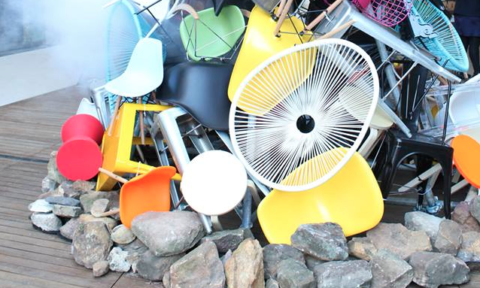
Award-winning Australian industrial and furniture designer Andrew Aloisio contacted me this week to share this photograph. “It’s an installation I did as a private studio exhibition many, many, years back now,” he says. “It is basically furniture made from suspended lycra, that collapses when you try to move it or sit on it. It was titled Copies Have No Substance.”

I think it speaks for itself! Thanks for sharing, Andrew!

The replica furniture debate on Interiors Addict has attracted a lot of attention this week with the

The replica furniture debate on Interiors Addict has attracted a lot of attention this week with the Authentic Design Alliance and trade fair Maison InStyle both blogging about it. It’s obviously a hot topic! In the meantime, some kind of technical error has seen all comments disappear from all posts on the blog. We’re looking into it and hope they’ll be back again very soon…

Say no to fake designer furniture!

Everyone’s entitled to their opinion and it’s not my place to say who is right or wrong, but I’m keen to publish a variety of views on this subject. Anne-Maree Sargeant has a vehemently anti-replica stance. As editor at large of belle magazine, creator of design blog The Snap Assembly and someone who helped set up Space Furniture for founder Kevin Jarrett, she knows a thing or two about design and what goes into producing original furniture. But she argues it is everyone’s responsilbity to be informed about what they’re buying and how ethical, environmentally friendly and fair it really is. I asked AMS a few questions on the topic and here’s what she had to say…

What do you think of the recent Herman Miller v Matt Blatt court case and the eventual outcome being settled out of court? Satisfactory? A triumph for designers?

It’s a small, very positive step to a much larger argument! Design registration is an expensive and complex process, with laws differing from country to country. The Danes protect a design for around 70 years and brands like Friz Hansen are as litigious as Herman Miller. Similarly, Italian design vanguard Cassina won a court battle with a hotel which had originals in the foyers and fakes/copies elsewhere. There are so many variables there is not a quick answer but the simplest understanding is a designer has to design register their work in each country to protect it. Even the big name manufacturers can’t afford to do this, let alone designers.

Why is replica furniture wrong?

Copying an original design denies the designer their royalty: the payment for their original idea. ‘Replica’ is taking the soft line. With a handbag it’s genuine or real vs fake/a copy/not real. Similarly, furniture and lighting that are not authorised should be labelled fake. Consumers have no knowledge of the working conditions, workers’ exposure to toxins, use of unethical and environmentally damaging materials and processes. You get what you pay for, so the products don’t last (ask anyone who’s broken a fake Philippe Starck designed ‘Ghost’ chair or a fake Arne Jacobsen designed ‘Series 7’ chair) generating landfill, not objects of desire that are passed through generations.

Does it it makes a difference if the designer is still living and why?

Of course it doesn’t. Copying a design is stealing IP. A real Picasso leaves a fake Picasso for dead. As with the Picasso Foundation, established to promote the great master’s work, famous designers have bodies to protect their design IP. Herman Miller are committed to authenticity, irrespective of the designer still being alive.

Is well designed furniture only for the wealthy?

Assuming good design is expensive is an oxymoron! In the case of Cassina Maestri who are authorised to produce Le Corbusier’s furniture, the brand embark on a process. They pay a fee to the foundation as well as a royalty for each piece sold, working closely with the foundation to ensure the execution is of the highest standard. There are vast costs involved with tooling for manufacturing, ultimately the big spend prior to the product getting to market, which is reflected in the selling price.

Where can everyday people buy original, affordable designs?

Join, Keith Melbourne’s new set of glass-inspired utility tables, there’s loads of great affordable design. Then there’s auctions and markets. I recently scored a Cassina SuperLegeria for $200 ($1,200 at Space), a Castiglione designed set of Zanotta tractor stools (less than half price) and my favourite Vico Magistretti kitchen stool (all for less than the price of a fake) at auctions.

There have always been copies, of handbags, fashion etc. Is this any different?

Every industry is different, some are highly regulated, others not. The music industry takes the hard line with copyright – the recent case of Men at Work losing to the licensee of The Kookaburra Song is a good example. As a writer, I have control over my IP and sign copyright according to usage. The fashion industry is a law unto itself (read Dana Thomas’ How Luxury Lost Its Lustre, a MUST-read for anyone pro unregulated manufacturing. It makes you vote with your wallet when you learn about children locked in factories, their legs tied to prevent them leaving…

Do you think your design background puts you in a better position to comment?

I studied interior design (RMIT) and later spent many years running Space Furniture, which I helped start for the founder Kevin Jarrett, so I guess 20 years of working with the top rung factories and being a design journalist for that duration perhaps gives a bit of knowledge. But anyone can be informed. It’s personal preference to be informed. The same as knowing if the tinned tuna one buys is sustainable or if the brand pursues overfished species, pushing them to extinction. 

Interiors magazines feature replica furniture all the time. Do you think they are setting a bad example or bowing to popular culture?

That’s an entirely different conversation that I am not qualified to answer, although I can commit to only promoting/reporting on original work. 

Any final food for thought?

Be original, stop following trends, buy vintage or at auctions or garage sales if you’re on a budget, be informed and spend ethically.

The Snap Assembly is on Facebook.

Photo copyright Sonny Vandevelde, Sonny Photos

Why replica furniture is okay

In the wake of the recent Herman Miller vs. Matt Blatt court case and a growing backlash against replica furniture, it’s a brave woman who puts her name to saying actually, it’s okay to buy that faux Eames lounge chair. That woman is Melbourne interior stylist Kylie Tyrrell from Gold Chalk Interiors and here’s what she has to say…

I’ve been thinking about real v replica for some time. I recently saw a house redecorated with replica furniture and I was pleasantly surprised.

Deep down I think I prefer real, but I know that that is very limiting. How on earth would you ever be able to afford more than one piece of the real thing, if even that?

 When I first went to check out some replica for myself I had visions that the quality would be terrible but I have to say that I really did like some of the items I had been eyeing off online. I also liked the fact that in some of the more popular pieces, there was a ‘good, better, best’ option available, depending on your budget.

I didn’t even realise that you could buy high quality replicas that have the same design, same quality and same comfort as the original, but are manufactured in a different country, making them much more affordable to the mass market.

Architects often recommend replica furniture to their clients who want the look without the hefty price tag. And many architects buy replicas themselves because they understand that today, good design and quality do not necessarily go hand in hand with high prices.

The main difference with a replica compared to an original is that the original will gain in value over time whilst the replica may one day end up in your hard rubbish collection. And you know what? that’s OK, because just maybe by the time that happens it could have well and truly served its purpose!”


Interiors Addict will be sharing a number of people’s opinions for and against replica furniture over the coming days. If you have something to say too, get in touch.


Photo of Kylie by Leonie Jane Photography

SPECIAL OFFER: 10% OFF EVERYTHING AT LIFE INTERIORS FOR ALL READERS! If you’ve seen Channel 9‘s new

SPECIAL OFFER: 10% OFF EVERYTHING AT LIFE INTERIORS FOR ALL READERS!

If you’ve seen Channel 9‘s new interior decoration show Top Design you’ll no doubt have ogled some great furniture from Life Interiors. This Sydney-based furniture retailer has a brilliant range of modern and retro furniture, ranging from the classic pieces we’re all familiar with, to original designs from some up and coming new designers. 
Favourites from their range include their Arco Floor Lamp with an Italian marble or black granite base, Tolix chairs and stools that are perfect for outdoors, the original Sticotti Gant; a beautiful everyday timber dining table and an extensive range of lounge chairs like this Organic Chair.
What’s more, they’re giving Interiors Addict readers an exclusive 10% off everything! Just enter the discount code INTA10 at the online checkout.